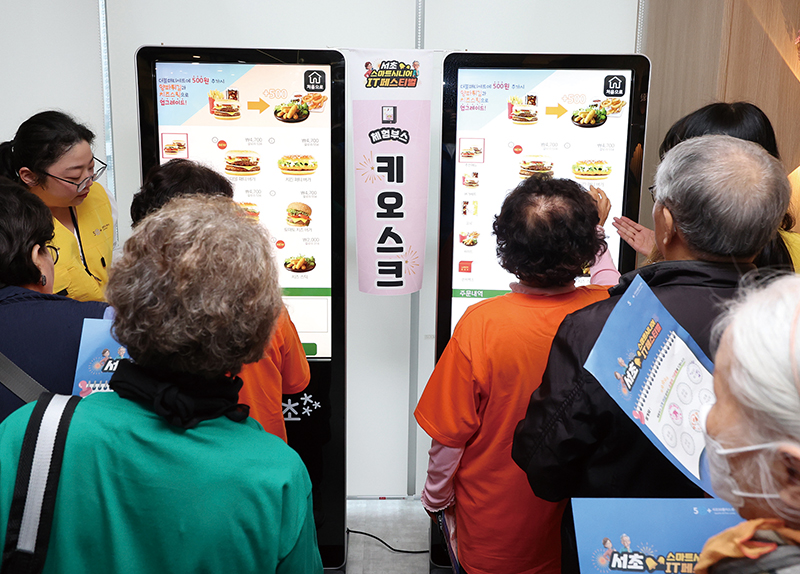
A majority of people with disabilities in South Korea say self-service kiosks remain difficult to use, underscoring ongoing accessibility gaps despite recent legal reforms.
In a 2024 survey by the Ministry of Health and Welfare, 58.1% of 277 respondents with kiosk experience described the process as inconvenient. Common frustrations included feeling rushed by waiting customers (54%) and difficulty finding buttons or navigating menus (26.1%). Unmanned ordering machines posed the greatest challenge, followed by payment kiosks, ticket machines, and certificate dispensers.
Nearly 45% of respondents said they preferred face-to-face service, more than twice the share who favored kiosks. The preference was highest among visually impaired users (72.3%) and wheelchair users (61.5%), who cited the lack of braille labels, non-adjustable screens, and other accessibility barriers.
Respondents suggested solutions such as on-site staff or call buttons, dedicated kiosks for inexperienced users, and public awareness campaigns.
A revised anti-discrimination law requiring accessible kiosks took effect in January 2023, with older facilities allowed until January 2026 to comply. A government review found that only 1.4% of public agencies currently operate fully accessible kiosks, while over 60% have no improvement plans, often citing budget or space limitations.