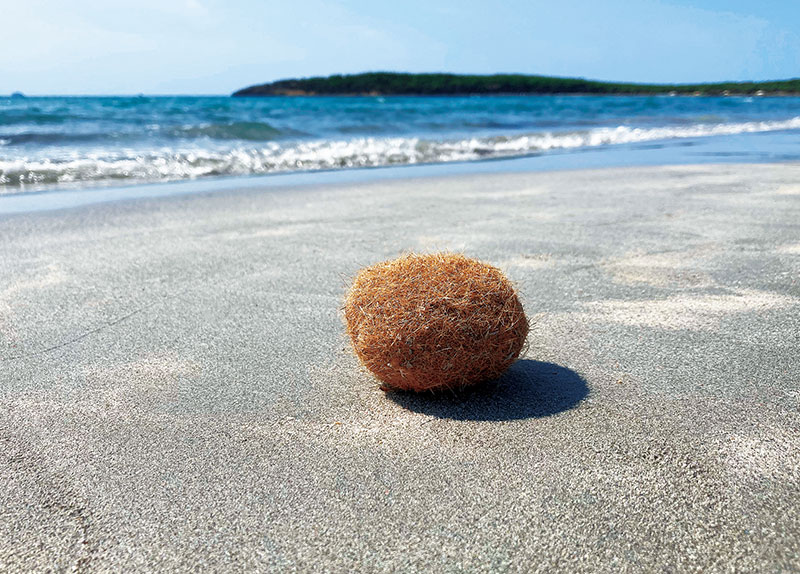
Seagrass meadows do more than oxygenate water and protect coastlines. A study by the University of Barcelona shows that these underwater “forests” also trap plastics, concentrating them into plant-made spheres that wash ashore.
Researchers analyzed stranded seagrass balls, known as “Neptune balls,” on four Mallorca beaches between 2018 and 2019. Loose seagrass leaves contained plastic in about half of the samples, with up to 600 fragments per kilogram. In Neptune balls, formed from the fibers of Posidonia oceanica, only 17% contained plastic, but those that did were densely packed – up to 1,470 pieces per kilogram. Most were filaments and fibers from fishing nets and textiles.
Seagrass meadows act like speed bumps. The swaying seagrass slows water currents, causing microplastics – tiny fragments from bags, fabrics, or nets – to settle and stick nearby. Each autumn, Posidonia sheds its tough leaves, and the sea’s back-and-forth motion frays and tangles the fibers, trapping plastic like a natural lint roller. Storms then dislodge the balls from the seabed, pushing them to shore. The Mediterranean study estimates this process may remove roughly 900 million fragments annually.
Scientists caution, however, that seagrass meadows are not a solution to plastic pollution. These ecosystems help intercept plastic, but the responsibility remains with humans to prevent plastic from entering the oceans in the first place.
The plastic-filled Neptune balls illustrate both the resilience of nature and the pervasiveness of human pollution. They are a striking reminder that even as plants help mitigate some impacts of waste, the long-term solution lies in changing how societies produce, use, and dispose of plastics.