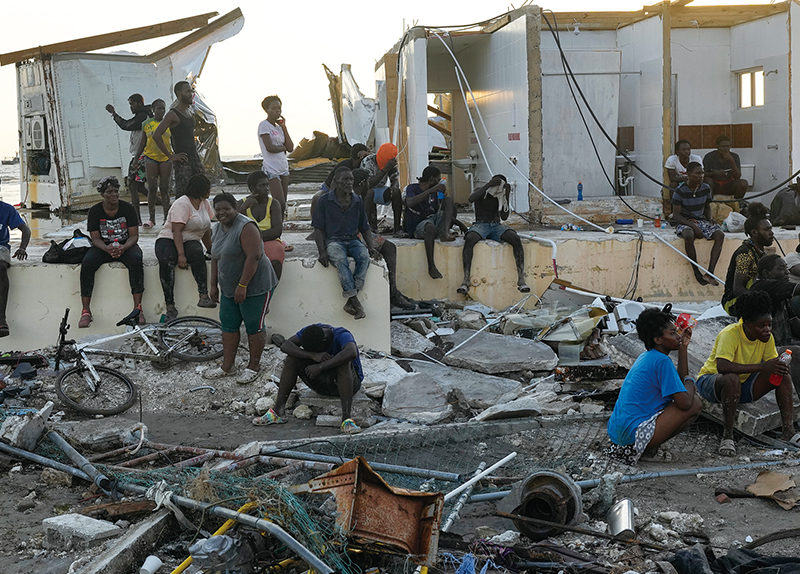
The most powerful hurricane ever recorded in Jamaica tore across the island late last month, striking as a Category 5 storm with sustained winds of 185 mph. Hurricane Melissa made landfall on Oct. 28, leaving widespread destruction and claiming at least 67 lives across the Caribbean – 32 in Jamaica, 34 in Haiti, and one in the Dominican Republic.
The coastal community of Black River, south of Trelawny, suffered the heaviest blow as the storm’s epicenter, with an estimated 90% of its structures destroyed. More than 490,000 customers remain without power, representing about 72% of Jamaica’s electricity network. At the storm’s peak, roughly 13,000 residents sought shelter in 521 emergency facilities, though many have since returned home.
Climate researchers at Imperial College London determined that climate change made a storm of Melissa’s intensity four times more likely, while increasing wind speeds by 11% and rainfall by 16% compared with preindustrial conditions. The storm caused nearly $8 billion in damage in Jamaica alone, equivalent to about half of the country’s annual gross domestic product (GDP).
The Jamaican government will receive a full $150 million payout from a World Bank catastrophe bond issued in 2024, though officials say this represents only a fraction of the recovery costs needed. Tourism Minister Edmund Bartlett said efforts are underway to restart the vital tourism sector, which accounts for 30% of Jamaica’s GDP and employs 20% of its workforce.
The government announced plans to fully reopen the tourism industry by Dec. 15, ahead of the critical festive season.